
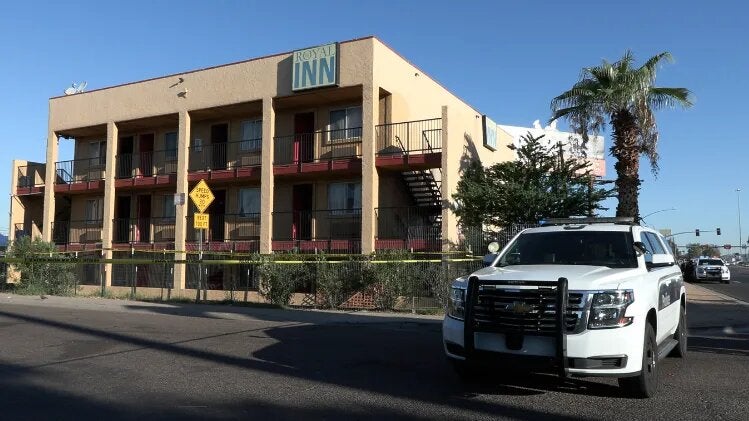
A US court has ordered the forfeiture of a Phoenix motel after its owner admitted a federal racketeering offence linked to prostitution and drug activity.
The case centres on the Royal Inn in Phoenix. Federal prosecutors said the motel had been used for ongoing illegal activity, affecting nearby residents, businesses and schools. The court ruling means the property is now owned by the US government.

Discover B2B Marketing That Performs
Combine business intelligence and editorial excellence to reach engaged professionals across 36 leading media platforms.
Sentencing and court decision
The sentence was handed down by the U.S. District Court for the District of Arizona. Judge Susan M. Brnovich sentenced motel owner Varsha Patel, 57, to five years of probation.
Patel had pleaded guilty to one count of using a facility of interstate commerce in aid of racketeering. As part of the sentence, the court ordered forfeiture of the Royal Inn property. The court also ordered the forfeiture of $744,000 in criminal proceeds and imposed a $5,000 fine.
Forfeiture in US law means the government takes ownership of property connected to criminal activity.
Investigation and enforcement action
The investigation involved the Federal Bureau of Investigation, the Phoenix Police Department and the U.S. Marshals Service.
Authorities said the motel had become a regular site for prostitution and drug distribution. Law enforcement agencies carried out enforcement action at the property in 2024. The motel was later shut down and secured.
Officials said the joint investigation aimed to address long-standing criminal activity in the area.
Impact on the local community
Federal prosecutors stated that criminal activity at the motel had affected the surrounding neighbourhood. Local residents and nearby businesses had raised concerns over safety and quality of life.
The forfeiture order removes the property from private ownership and prevents it from continuing to operate in its previous form.
The case reflects broader US efforts to use federal racketeering laws to target properties that enable organised illegal activity. Authorities have indicated that similar investigations may continue where commercial premises are used to support prostitution, drug trafficking or other crimes.


