
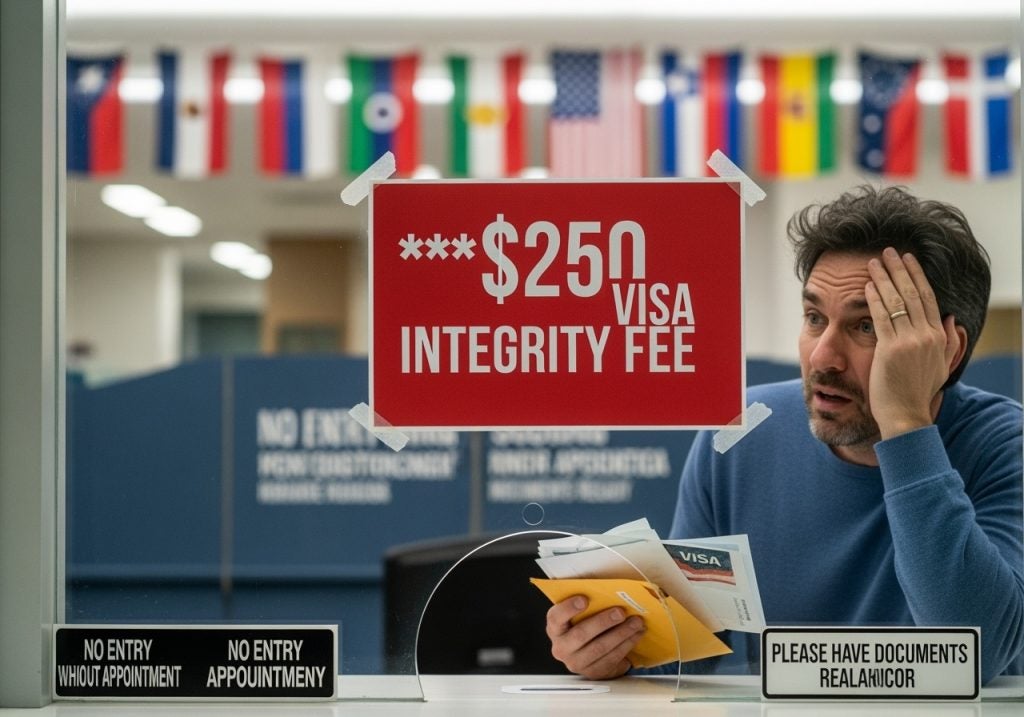
Hotels across the United States are preparing for a potential drop in international visitors as a new $250 “visa integrity fee” is set to take effect on 1 October 2025.
The charge will apply to travellers from non-visa-waiver countries, adding to the already high costs of securing entry to the US.
Analysts say the policy could reshape international travel patterns and place additional pressure on hotels in tourism-dependent states.
Fall in international arrivals expected
The fee will increase the total cost of a US visa to about $442, one of the most expensive globally.
Travel analysts warn this could deter visitors from countries such as China, India, Mexico and Brazil, all of which play a major role in international tourism to the US. Popular destinations including New York, California and Florida are seen as particularly vulnerable to reduced demand, given their reliance on overseas guests.
The US has already recorded several consecutive months of declining inbound tourism, raising concerns that the new fee will deepen the downturn.
Impact on hotel earnings and spending habits
Industry experts caution that the additional cost will not only reduce the number of visitors but also affect how much they spend during their stay.
Travellers facing higher entry costs may choose lower-cost hotels, shorten their stays or reduce spending on restaurants and attractions.
A family of four, for instance, would face $1,000 in extra visa fees before booking accommodation or flights. Budget and mid-range hotels are expected to be hardest hit, while luxury properties may prove more resilient.
Uneven impact across global markets
The visa integrity fee does not apply to travellers from visa-waiver countries, which include much of Europe and Australia. Analysts therefore expect the sharpest declines in visitors from Asia and Latin America.
This uneven effect is likely to challenge hotels that depend heavily on long-haul travellers from these regions. The timing is also critical, as the US tourism sector is still lagging behind its pre-pandemic recovery.
While major events such as the FIFA World Cup in 2026 and the Los Angeles Olympics in 2028 will continue to draw international audiences, the additional cost could discourage attendance from non-waiver markets.
Hotels across the US are now bracing for reduced international demand and greater uncertainty in the years ahead.