
“Everybody is looking for something different; hotels have to work that bit
harder to retain their guests,” says Jeroen Bergmans, the travel editor of
style bible Wallpaper*, explaining the rise in atmospheric theming by
hotels. “What is new becomes de rigueur very quickly.”
So, pillow menus may give you the best sleep and hot stone therapy may
relieve aches and pains, but hotels are increasingly exploring the non-physical
benefits of art, music or scent to stimulate the senses of hotel guests and
their staff.
Go deeper with GlobalData


Discover B2B Marketing That Performs
Combine business intelligence and editorial excellence to reach engaged professionals across 36 leading media platforms.
At the Aria hotel in Prague, for example, which opened in 2003, music is
used to enhance the guest experience. Each floor features a particular musical
genre − classical, opera, jazz and contemporary music − with every
room embracing a particular musical star from Beethoven to Billie Holiday, Dvorák to
the Beatles.
Music by the chosen artist is ready downloaded on a computer in each
soundproofed room and can be played for the convenience of the guest, who can
leaf through a biography or admire artwork inspired by the musician as
well.
“Of course there is music in the public areas too,” explains the
hotel’s general manager, Paris Kanka, “It is relaxing and calm for the
guests. Plus, on Friday and Saturday evenings we have jazz nights and from
April or May we hold musical evenings on the roof terrace.”
An essential member of the hotel staff is the resident musicologist, Dr
Ivana Stehlikova, who presides over thousands of CDs in the library. Stehlikova
also provides concierge services, such as booking concert tickets. “This sort
of experience is generally aimed at leisure travellers and particularly appeals
to wives, who often decide which hotels to stay in,” says Bergmans. In
Prague’s competitive luxury hotel market, with the Mandarin Oriental and
the Four Seasons nearby, the Aria’s musical setting gives it a unique
selling point.
CULTURAL AMBIENCE
The appeal of the Hotel Arena in Amsterdam lies in its programme of cultural
events and lively atmosphere. “Our surroundings are conducive to a real
exchange of ideas,” says general manager Jimmy Sarfraz. “Our international
guests can sit and eat alongside local people from Amsterdam and there is
always something going on, from photography exhibitions to film festivals. I
think this also helps to break down the boundaries between staff and
guests.”
Bergmans agrees. “Guests now want something more individual that reflects
the local identity,” he says. And for staff too, working in an environment that
reflects their local area, as opposed to merely the mission statement of a
multinational chain, must engender a sense of being valued by their
employer.
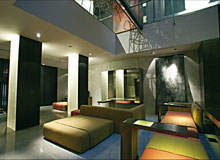
The Straf Hotel in Milan is another hotel with a visually arresting theme.
“The colours and the materials help to create a really modern concept, while
the staff are all young and informal, making it a very difference experience
from a commercial hotel,” says general manager Marco Soli.
“I began to extract a multitude of elements associated with contemporary
art, based on placing recycled objects in new surroundings,” says interior
designer Vincenzo de Cotiis of his work at the Straf. And so in the bedrooms
one encounters second-hand mirrors next to designer sinks while fibreglass
panels sit with magnifying glasses weathered by time in the bar. The bar space
at the Straf is also intended as a space where book readings, art installations
or performances can be held to great effect. Its concrete walls, silk screened
pictures, burnished brass and contrasts of light and shade create a stimulating
backdrop.
“Very often the little extras found in boutique hotels get picked up by the
big chains,” says Bergmans. Starwood Hotels and Resorts last year appointed
Jerome Sans as a cultural curator to direct experimental art partnerships in
its hotels with cultural institutions around the world. So far Sans has worked
with lighting artist Thierry Dreyfus on a series of installations, beginning
with Le Méridien in San Francisco, which featured a colourful
reinterpretation of the building’s exterior. Over at Le Royal
Méridien Shanghai, meanwhile, a light installation represents the
city’s skyline. “The goal is to become a cultural hub for people
attracted to art, design and fashion,” says Sans.
APPEAL TO THE SENSES
Smell too can play a huge part in theming a hotel. North America-based Omni
hotels has an official lobby scent of lemongrass and green tea, while
mochaccino fragrance is used in its coffee areas, and a coconut smell can be
found by the pool. Langham Hotels uses an essence of ginger flower while
Sheraton opts for a blend of fig, bergamot, jasmine and freesia. W Hotels
changes its signature scent seasonally – fresh-cut grass for spring,
guava for summer, for instance – and Westin’s white tea fragrance
has proved such a hit that guests can now buy candles, diffusers and pot pourri
infused with it.
This doesn’t surprise Bergmans. “Using olfactory devices comes from
the retail sector,” he says. “If people like a certain smell, they will want to
visit again.” And with such potent brand extension opportunities, it may be
that soon a hotel without a distinctive smell may become as unlikely as a
supermarket without the smell of baked bread. We are sensory beings and
don’t just need physical nourishment. We also want pleasure from the
senses. Of course, there is a danger of sensory overload – just think of that
off-putting fusion of scents in a department store perfume section, for
instance – so if fine dining is a strong feature of the hotel, it makes
sense for guests to take in the mouthwatering aromas of the food above
everything else.
Theming a hotel brings with it a fantastic and often unique marketing
opportunity, and the key is not to waver from the hotel’s core concept
– lest it put off core customers from returning or recommending it
– even if this might mean passing over other potential guests. Developing
partnerships with other local businesses that might appeal to the hotel’s
target market, putting together packages and promotions, and partnering with
specialist tour operators and societies will also help make atmospheric theming
a success.


