
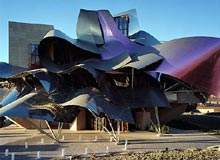
No longer satisfied with providing first-class hospitality, leading hotel
brands are raising the bar with bold new designs. By designing ground-breaking
and iconic buildings with state-of-the art facilities, architects are turning
their hotels into attractions in their own right.
With customer expectations constantly challenged, it is no longer sufficient
to offer five-star luxury, gourmet cuisine and the latest spas and technology.
To stand out from an increasingly crowded marketplace, a hotel needs an “edge”
to secure its share of the market. For the customers, it’s about turning
an overnight stay into an “experience”.
Go deeper with GlobalData


Discover B2B Marketing That Performs
Combine business intelligence and editorial excellence to reach engaged professionals across 36 leading media platforms.
EASTERN SPLENDOUR
The Far and Middle East are leading the field with landmark hotels such as
the Burj Al Arab in Dubai and the Grand Hyatt Shanghai in China. The Grand
Hyatt Shanghai, located on the 53rd to 87th floors of the Jin Mao Tower, is the
tallest hotel in the world – not bad as a unique selling point.
The 555-bedroom hotel was designed by Chicago’s Skidmore, Owings &
Merrill LLP. Edward Tai, area vice president of Hyatt International
Corporation, explains the attraction of mega hotels: “This was the start of
real international hotels in China, moving from five-star to five-star-plus,
and it made a statement about what China was capable of.”
The Grand Hyatt Shanghai had a big impact. “When we opened, people were just
coming in to look because they couldn’t believe there was such a hotel,”
Tai explains. “It was a wake-up call for China in terms of creativity and
elegance.”
Tai says the hotel was a vital tool for Hyatt’s second foray into
China. “Hyatt came into China quite a long time ago and although we had a good
name elsewhere, we didn’t really have a name here,” he says. “We
didn’t come into the market when other hotels did because we
weren’t mature enough.”
Tai believes mega hotels have an important role to play in terms of guests
retaining a good impression. “A luxurious hotel like this is a ‘show-off
place’; it gives people an ability to show off themselves and instils
confidence in the people they are dealing with,” he says.
The creation of a hotel of such magnitude was awarded to the architects on
the basis of their creation of the Grand Hyatt Hong Kong. While the design and
construction was challenging, Tai stresses that a major influence on the design
was a practical layout, particularly where elevators ran and staff rooms were
located. “Operationally, we are more concerned with the interior layout,” he
says. “We design from within. We do not just focus on the façade.”
It is particularly important to get it right in a hotel of this size because
being very tall is a big challenge. “I think the design is very well thought
out and we have very high speed elevators to help staff move around quickly so
there is no time wasting,” explains Tai. The increased use of computers, mobile
phones and pagers also helped coordinate service in the vast hotel.
Maintaining customer service in such an extraordinary building is a
challenge, and can only be achieved with good procedures in place. However, Tai
acknowledges that this is probably more achievable in the Middle and Far East,
where labour costs are more affordable than in Europe.
Teamwork is also a vital component, demanding a general manager with plenty
of energy, who is able to delegate and motivate to achieve an overarching goal.
The hotel’s success has earned it recognition as one of 2006’s top
75 hotels in Asia in Condé Nast Traveler magazine.
OPULENCE ON A GRAND SCALE
In the Middle East the Burj Al Arab has earned recognition as one of the
best hotels in the world and is setting standards for opulence which new
generations of hotels are following.
Designed to resemble a billowing sail at a height of 321m, the world’s
tallest free-standing hotel is a vital marketing tool for the emirate.
Self-certifying itself as the only seven-star hotel in the world, it pushes the
boundaries of hotel architecture, construction, opulence and customer
service.
The all-suite hotel is Dubai’s most famous landmark and its stature
ensures it stands out despite an explosion in mega and boutique hotels this
century. “Our aim is always to offer an unparalleled experience to our guests,
many of whom come back time and again,” says Gerald Lawless, from owners
Jumeirah.
In a competitive market, a hotel such as the Burj Al Arab has to be
confident of its mega status to stay ahead of a stream of magnificent hotels in
the pipeline. The St Regis Residences is scheduled to open in Singapore in
2007, a joint venture between City Developments Ltd, Hong Leong Holdings Ltd
and TID Pte Ltd. “Lavish world-class designs, incomparable hospitality and
unparalleled service” are at the core of its conception, according to the
developers.
Made up of 173 residences, suites, penthouses and a 299-guestroom hotel
managed by Starwood Hotel & Resorts Worldwide, the resort is being marketed
in a series of $6m (£3m) show suites. “This new development marks a new
benchmark for luxury living,” says Kwek Leng Beng, executive chairman of City
Developments Ltd. “St Regis will be the place in Singapore to be indulged and
treated like royalty.”
MIXED-USE SITES
On the other side of the world, Foster + Partners are designing the
groundbreaking Aleph in Argentina – a mixed-use cultural and residential
quarter in Buenos Aires. At its heart is the new Philippe Starck-designed Faena
Hotel + Universe, on the waterfront of the Puerto Madero Este harbour.
Converted from a grain warehouse, the Faena Hotel is constructed using imported
Manchester bricks, with interiors in black marble and red velvet, and is a
first for the country’s hospitality industry.
The trend for “mega” statements of design and luxury in first-class
surroundings is taking a different direction in Europe, where magnitude on the
scale of the Burj Al Arab and the Grand Hyatt Shanghai is more difficult to
achieve in a costly labour market.
Instead, European hotel developers are turning to iconic buildings and
locations to stand out from the crowd. The Four Seasons Tivoli in Copenhagen,
due to open in 2010 and designed by Foster + Partners, is described as “a
contemporary interpretation of Copenhagen spires” and includes cylindrical
buildings with roof gardens. Managing Director Lars Liebst,adds: “We are
presenting a beautiful and thoroughly prepared project which, in our opinion,
has the quality to become a landmark for both Tivoli and Copenhagen.”
The hotel follows the benchmark set by Rocco Forte’s Hotel de Rome,
which opened in Berlin last year. The hotel is a conversion of an 1889 building
designed by architect Ludwig Heim, which until 1945 housed the Dresdner Bank.
Today the original bank vault has been turned into a 20m swimming pool.
Within its historic walls, designer Tommaso Ziffer has created a beautiful
and unique interior. His design sympathetically integrates the old bank’s
more idiosyncratic features, and since opening last year, the hotel has been
celebrated as a fusion of contemporary chic and old-world Teutonic
grandeur.
Elsewhere, the Americans are hot on the heels of the mega trend. Later this
year, the Bal Harbour Village opens in Miami, designed by Nichols, Brosch,
Sandoval & Associates. Each suite has privately commissioned artwork
adorning the walls of a secret “Powder Room”. The pièce de
résistance is the Masterpiece Collection – a privately
commissioned collection of fine art under the care of in-house curator Joan
Warren-Grady. Including a 30ft bronze sculpture by Guy Dill, and paintings by
Jay McCafferty and Darren Waterston, the hotel is a tourist attraction in its
own right.
So, whether it be a location in the tallest building in the world, a
swimming pool in a bank vault or an art gallery, it seems hotels are confident
that guests are still hungry for mega hotels in the 21st century.


